
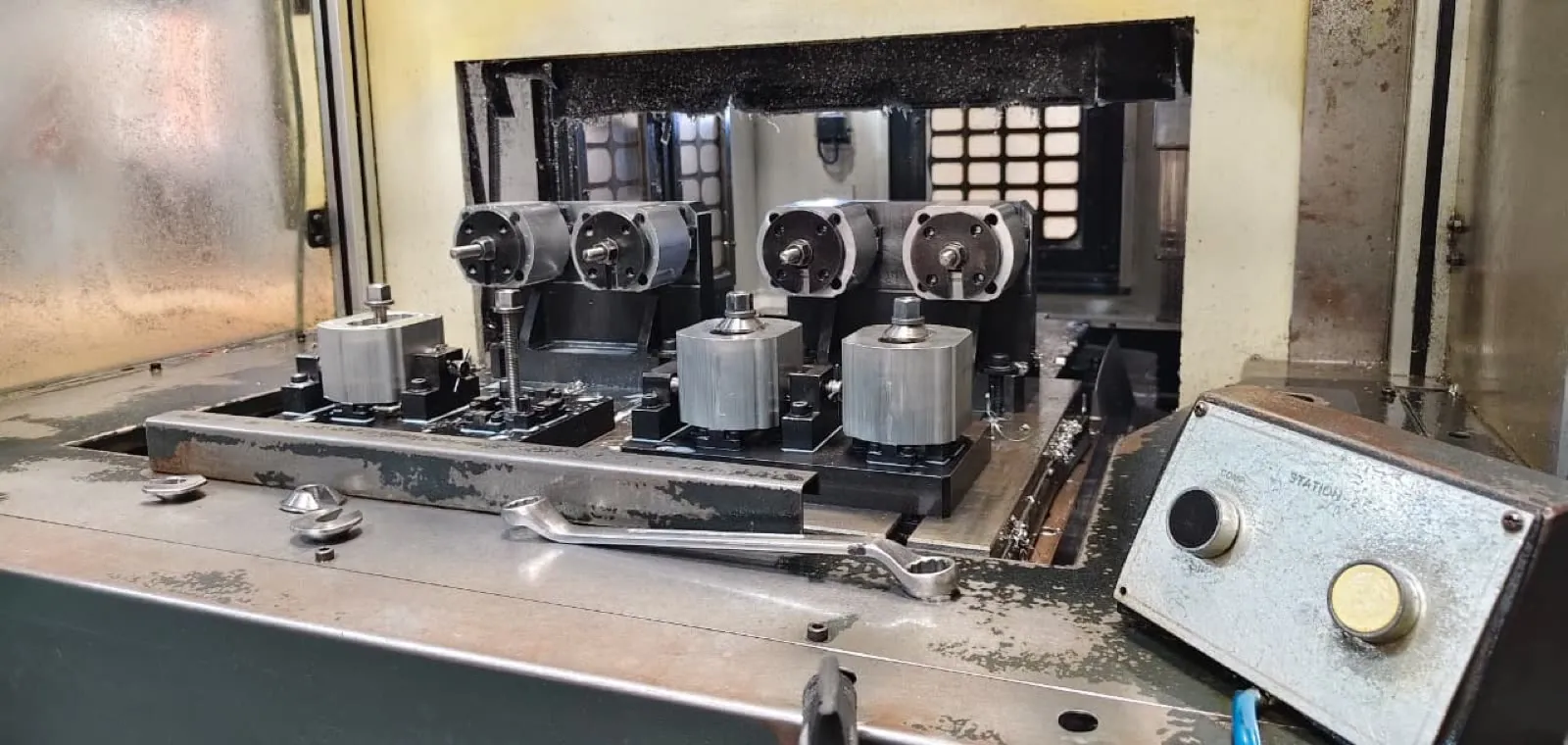
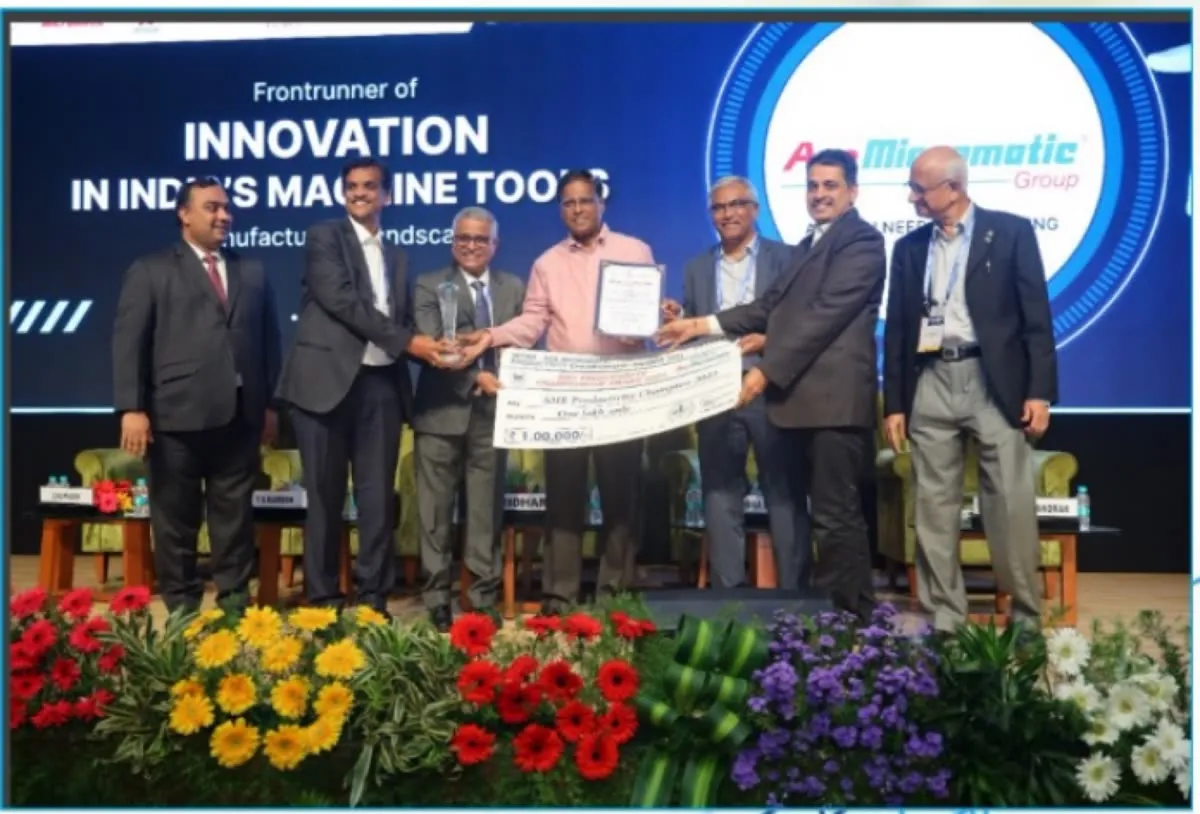
The case study of Distinct Productivity Solutions was presented at the IIT Madras Research Park as part of the National Productivity Championship competition. It was judged the best case study in the SME category, and was awarded a cash prize of Rs. 1,00,000 and the title “Productivity Champion-2023”.
Productivity Champion-2023 — best case study, SME category, National Productivity Summit 2023, IIT Madras Research Park.
From flexible manufacturing to a dedicated SPM
It was all about changing the production strategy from a flexible manufacturing system (FMS) to a dedicated special purpose machine (SPM). The key learning: as volumes increase, FMS is no longer the right solution — the manufacturing strategy has to change to dedicated SPMs.
The model below guides the selection of manufacturing strategies for various volume propositions.
Swipe to view the full model →
Change in the manufacturing strategy from FMS to DEDICATED is required.
Inside the transformation: smarter, leaner, stronger
At Distinct Productivity Solutions (DPS), we believe in engineering excellence that doesn’t just meet standards, it sets them. One of our most successful productivity transformation stories came from rethinking the manufacturing process of a high-volume precision component, originally produced on 7 Vertical Machining Centers (VMCs).
With monthly production demands reaching 500,000 pieces (20,000 per day), our setup became unsustainable. It demanded high power, large floor space, more manpower, excess coolant, frequent tool changes, and faced challenges in rejection rates. We knew it was time to reimagine the process.
Identifying the Need for Change
This case study exemplifies the potential for innovation in manufacturing processes, particularly in industries facing price sensitivity and high precision demands.
As production volumes escalated, managing the flexible manufacturing system became increasingly complex and inefficient. The management team recognized the necessity of enhancing productivity while simultaneously reducing operational costs. Initial considerations included the integration of robotic systems for all seven machines; however, this option was deemed too costly and impractical due to anticipated productivity losses.
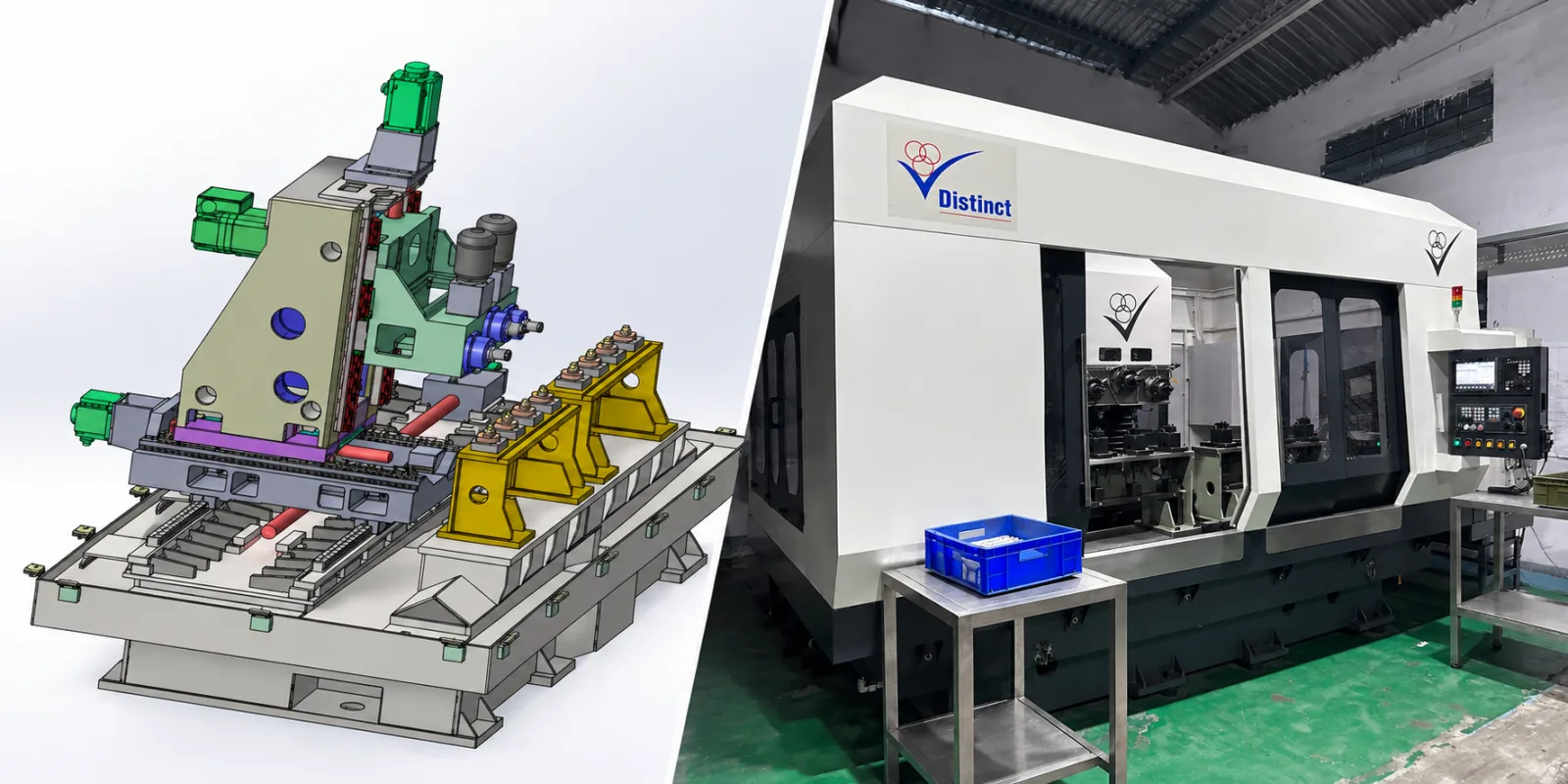
Consequently, a strategic decision was made to develop two dedicated SPMs specifically designed for the operation. This shift aimed to optimize various aspects of the manufacturing process, including:
- 01Reduced Space RequirementsThe new SPMs would occupy significantly less floor space compared to the existing VMC setup.
- 02Lower Power ConsumptionEnergy-efficient designs were prioritized to minimize electricity usage.
- 03Decreased Coolant UsageEfficient machining processes were implemented to reduce coolant needs.
- 04Fewer Tools and OperatorsStreamlined operations meant that fewer tools would be required, along with a reduction in the number of operators.
- 05Minimized Rejection RatesEnhanced precision and automated quality control systems would lead to fewer defective parts.
Evolution of the SPM Concept
The initial concept involved a Rotary SPM design; however, this idea was ultimately discarded due to concerns regarding maintainability and the complexity of machine construction. Through several iterations and refinements, the project team derived a set of desires and inferences for the new SPMs, focusing on practicality and efficiency.
Key Desires and Inferences for the New SPMs
The following table summarizes the primary objectives and insights gained during the development of the new SPMs:
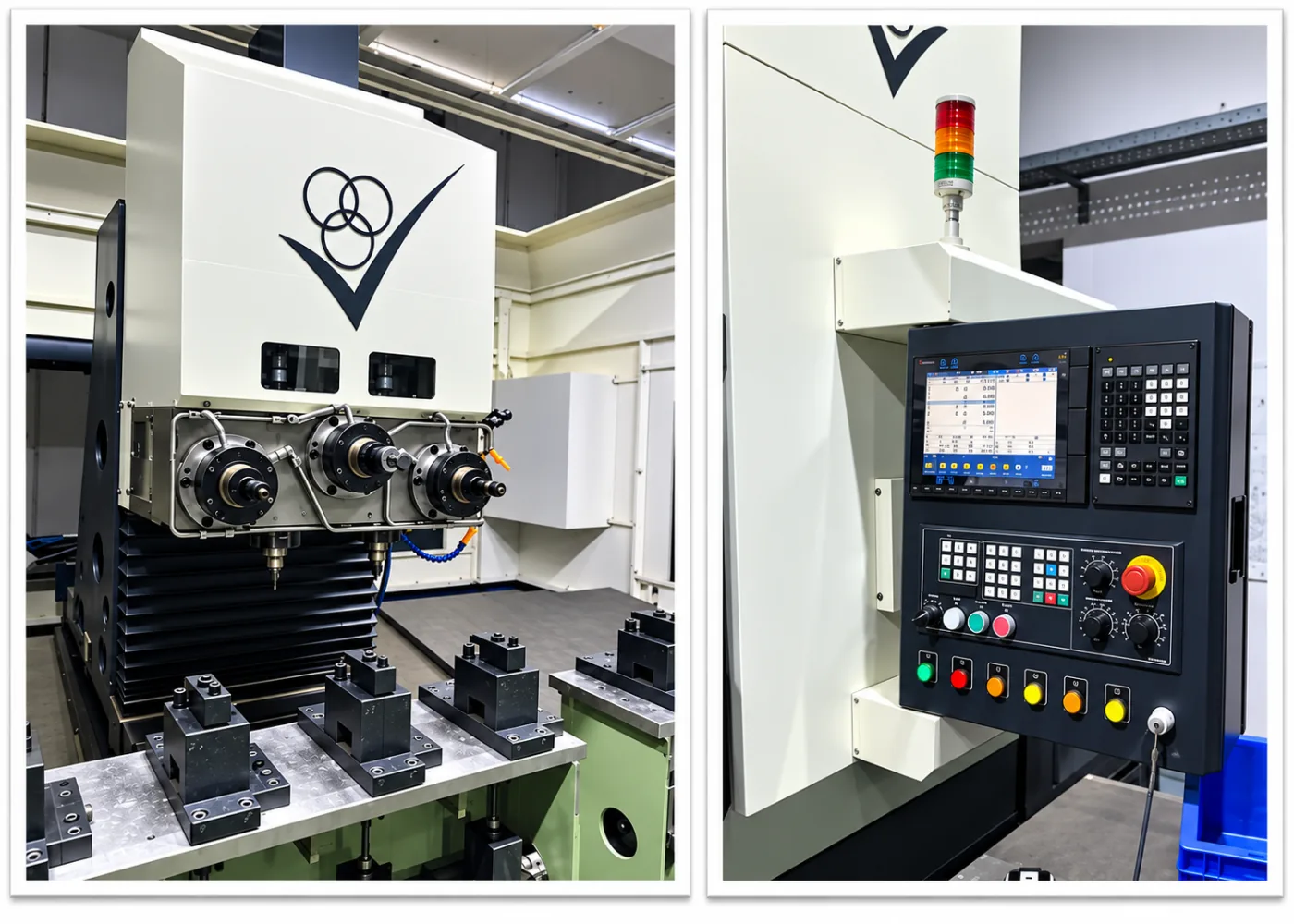
- 01Manufacturing StrategyShould be a 5 Spindle SPM to enhance productivity.
- 02Number of MachinesOnly 2 machines needed due to multi-spindle capability allowing for multiple simultaneous operations.
- 03Idle Time to Cycle Timer RatioImplement a 2-station configuration: one station for loading/unloading and another for operational tasks.
- 04Use of Pallet ChangerComponent loading on a fixed table to ensure maximum repeatability; moving column configuration required.
- 05Floor Space RequiredDesign should occupy less floor space, optimizing factory layout.
- 06Total Connected LoadAim for less power consumption to reduce operational costs.
- 07Loading/Unloading EfficiencyOperator workload reduced by 50% as one reloading task is eliminated.
- 08Number of OperatorsOnly 4 operators required (2 machines with 2 operators each, working 12-hour shifts).
- 09Fatigue of OperatorsOperators can work in a sitting posture, reducing fatigue and improving comfort.
- 10Nature of OperatorsMinimal need for skilled labor due to no frequent offset corrections or tool changes necessary.
- 11Coolant Tank RequirementsLess coolant is required, leading to cost savings and simplified maintenance.
- 12Initial InvestmentFocus on an in-house developed SPM, reducing reliance on external suppliers and enhancing control over production.
- 13Cost Levels (on a scale of 100)Significant cost savings are anticipated due to efficiency improvements and reduced operational expenses.
- 14Rejection LevelsReduced rejection rates compared to previous setups (7 spindles and 3 tools leading to 21 offset corrections), minimizing thermal stabilization issues.
- 15Risk of ObsolescenceThe CNC SPM machine should be convertible into Horizontal or Vertical Drilling Machines, offering versatility for future needs. Only the spindle head may become obsolete.
The transition from 7 conventional VMCs to 2 custom-built, in-house Special Purpose Machines (SPMs) at DPS is a testament to our unwavering commitment to innovation, lean manufacturing, and value-driven engineering. By reimagining the process from the ground up, we achieved significant improvements in productivity, cost efficiency, operator comfort, and floor space optimization — all while meeting the growing volume demands without compromising on quality.
This transformation not only resolved the immediate operational challenges but also future-proofed the manufacturing line with scalable, energy-efficient, and flexible machinery. The success of this initiative reinforces DPS’s position as a forward-thinking manufacturing partner capable of delivering distinct, productive solutions that drive real-world impact.
At DPS, innovation is not an option — it’s a strategy for continuous improvement.